

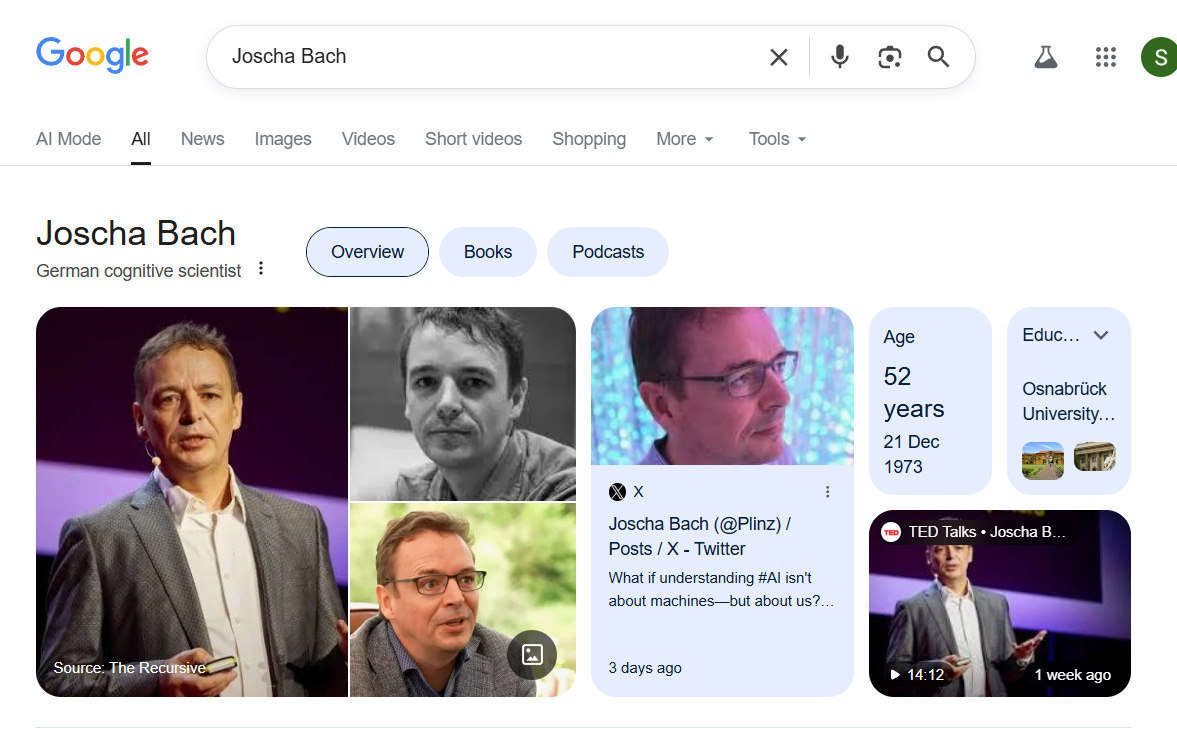
Source: U.S. Department of Justice–released Epstein records
Material shown: Email correspondence, Skype logs, travel coordination, residence scheduling
Status: No allegations or charges in these documents
Search frequency
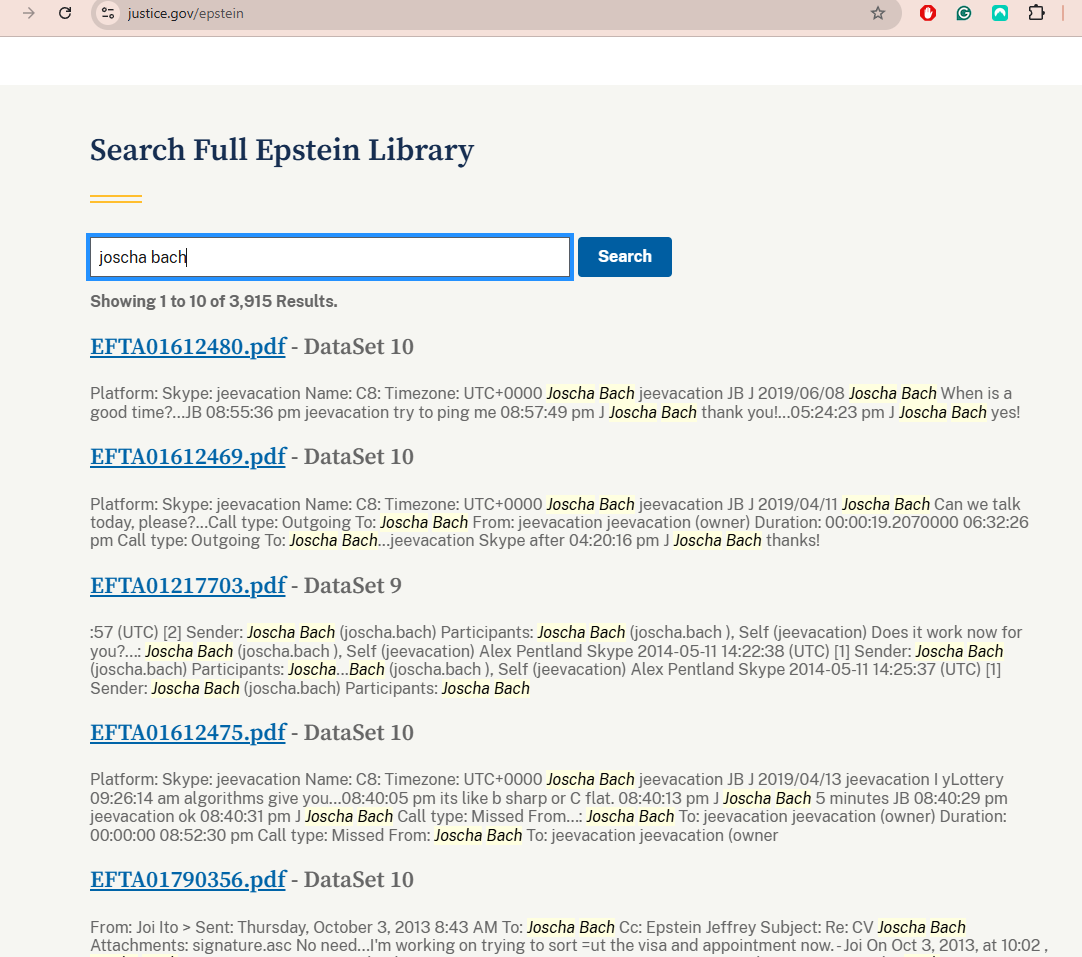
A search for “Joscha Bach” in the released Epstein document library returns 3,915 results.
⚠️ Important clarification:
This figure reflects text matches across emails, call logs, and system records, including repeated names within single threads. It does not represent 3,915 distinct meetings or events.
Documented appearances
Across the records shown, Joscha Bach is referenced extensively in:
Email correspondence with Epstein staff
Skype logs and call records
Travel coordination, including flights between the U.S. and Europe
Scheduling records for stays at Epstein’s Manhattan residence
Screenshots of representative documents are included below.


What the records show
Based strictly on the documents displayed:
Emails confirm Bach staying at Epstein’s New York apartment during specific date ranges (including May 10–13, 2017)
Messages coordinate use of the apartment, availability, and confirmation of accommodation
Other records show frequent communication, including calls and follow-ups
The correspondence references professional meetings and conference travel
The material is logistical and administrative in nature.
Public context
Joscha Bach is a German cognitive scientist and AI researcher, known for work at conferences, research institutes, and technology-focused events.
This information is included solely to explain why the name may be recognizable.
Archival clarification
Appearance in these records does not imply guilt, knowledge, or criminal conduct.
This micro-profile documents frequency, logistics, and context of references only, as shown in released materials.
Why this is archived
Unlike many names that appear briefly, Joscha Bach’s name appears repeatedly and across multiple document types, including confirmed residence use at Epstein’s New York property.
Documenting high-frequency references and accommodation usage is necessary to accurately map the administrative and social footprint reflected in the files — without speculation.
Archival note:
This entry may be updated if additional documents referencing this name are released.